



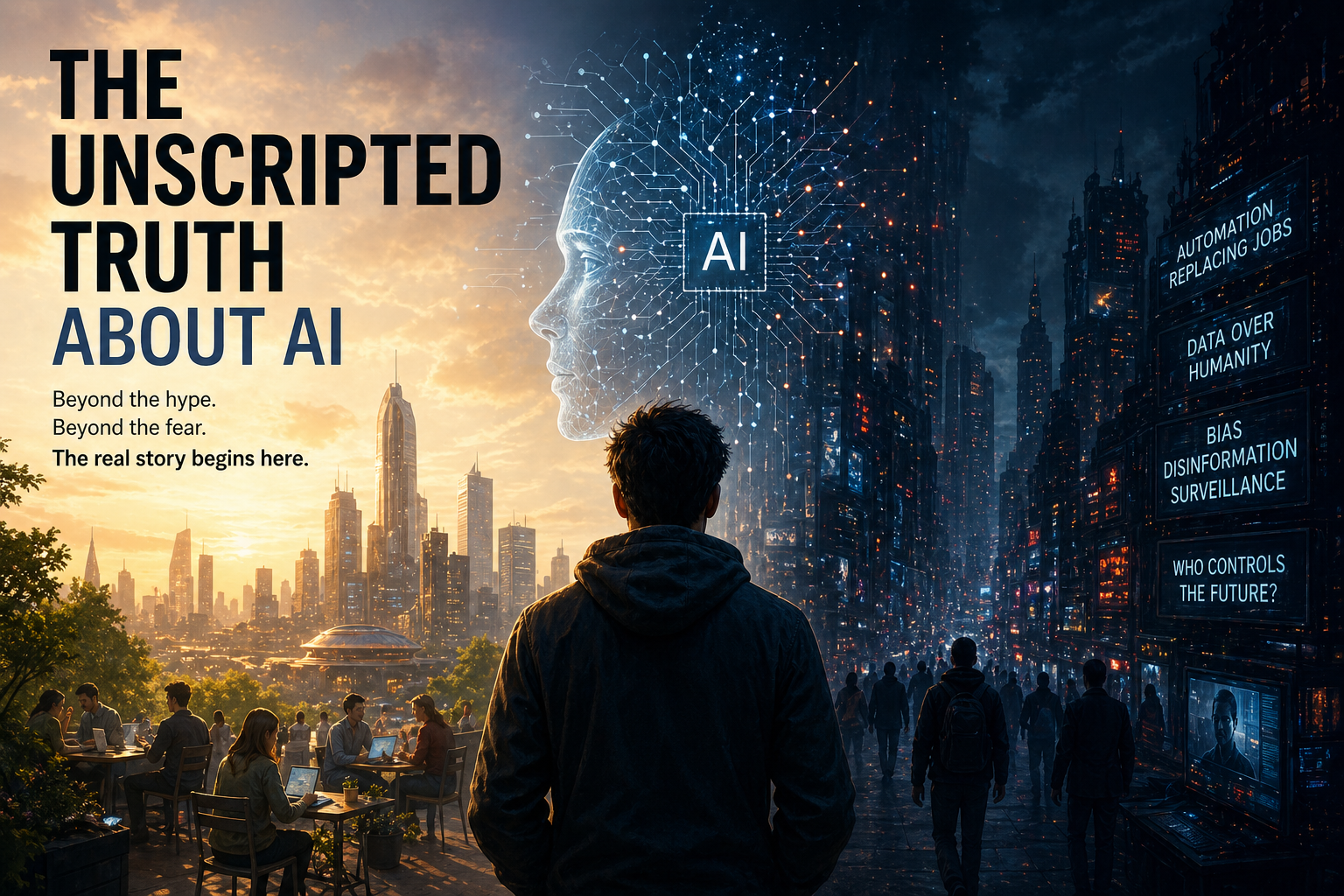
We thought we were building tools. We might have been building mirrors.
A raw, honest look at the truth about AI, its impact on human identity, creativity, and the uncertain future we are quietly stepping into.
It was 2AM.
The kind of hour where everything feels slightly unreal. I had been staring at my screen for too long, watching lines of code blur into each other. I was tired, but not enough to stop. There was this pull, something between curiosity and obsession.
I typed a prompt into the model. Nothing special. Just a rough idea for an article I had been struggling to write for days.
What came back wasn’t just good. It was better than what I had written.
There was a moment, maybe two seconds long, where I just sat there. No excitement. No fear. Just silence.
Then something uncomfortable settled in.
If this could do what I do, what exactly was left of what I thought was mine?
I closed the laptop, but I didn’t sleep.
The Illusion Phase
We like to believe we understand what is happening.
The narrative is everywhere. AI is a tool. A powerful one, yes, but still something we control. Something we direct. Something that works for us.
You hear it in conversations, in startup pitches, in late night threads from people building the next big thing. AI will make us more productive. It will unlock creativity. It will remove friction from work. It will give people superpowers.
A designer can generate ten concepts in minutes. A developer can scaffold an entire system in a single sitting. A writer can draft faster than ever before. It feels like leverage. Like acceleration.
Like progress.
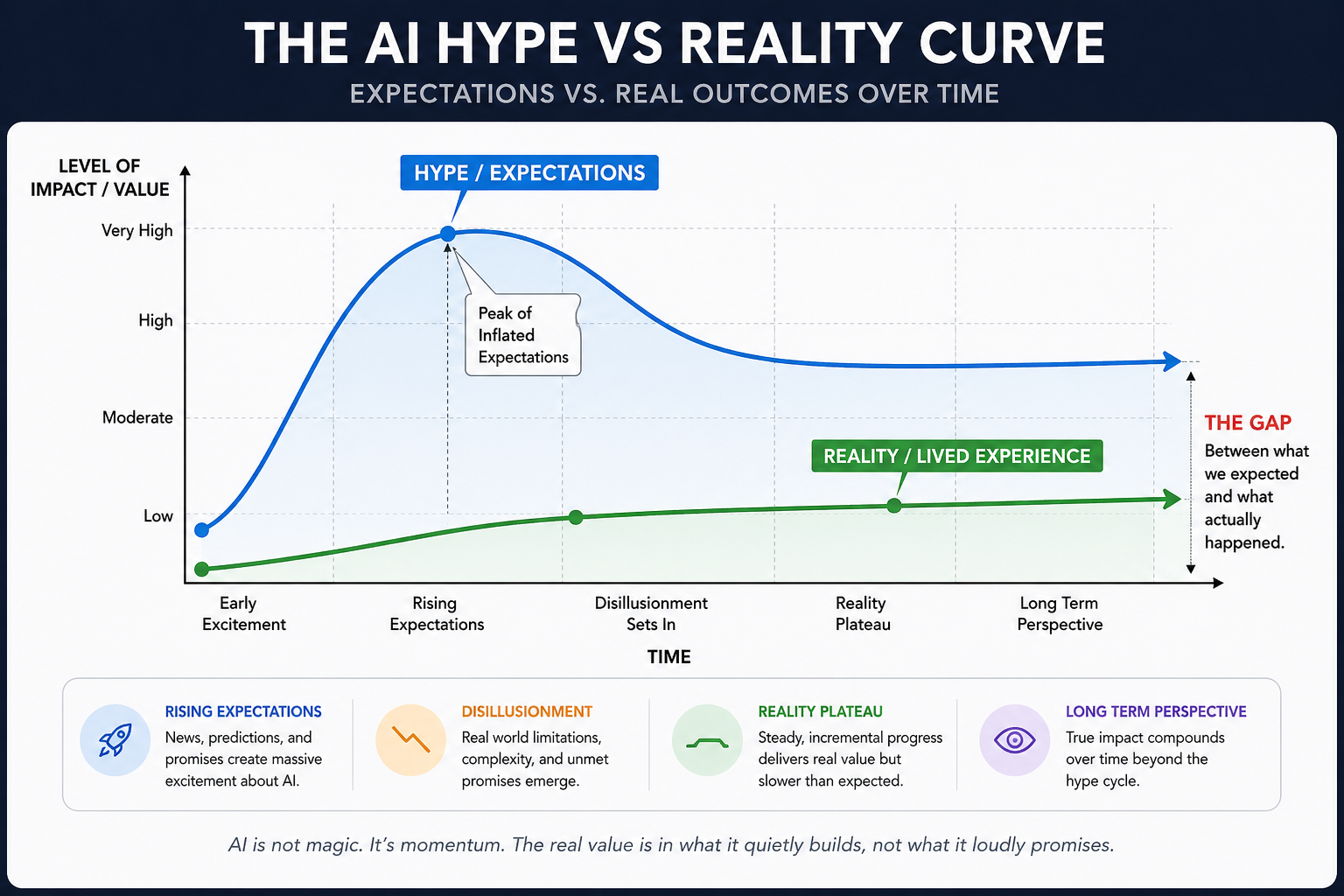
But there is a subtle shift happening beneath all of that.
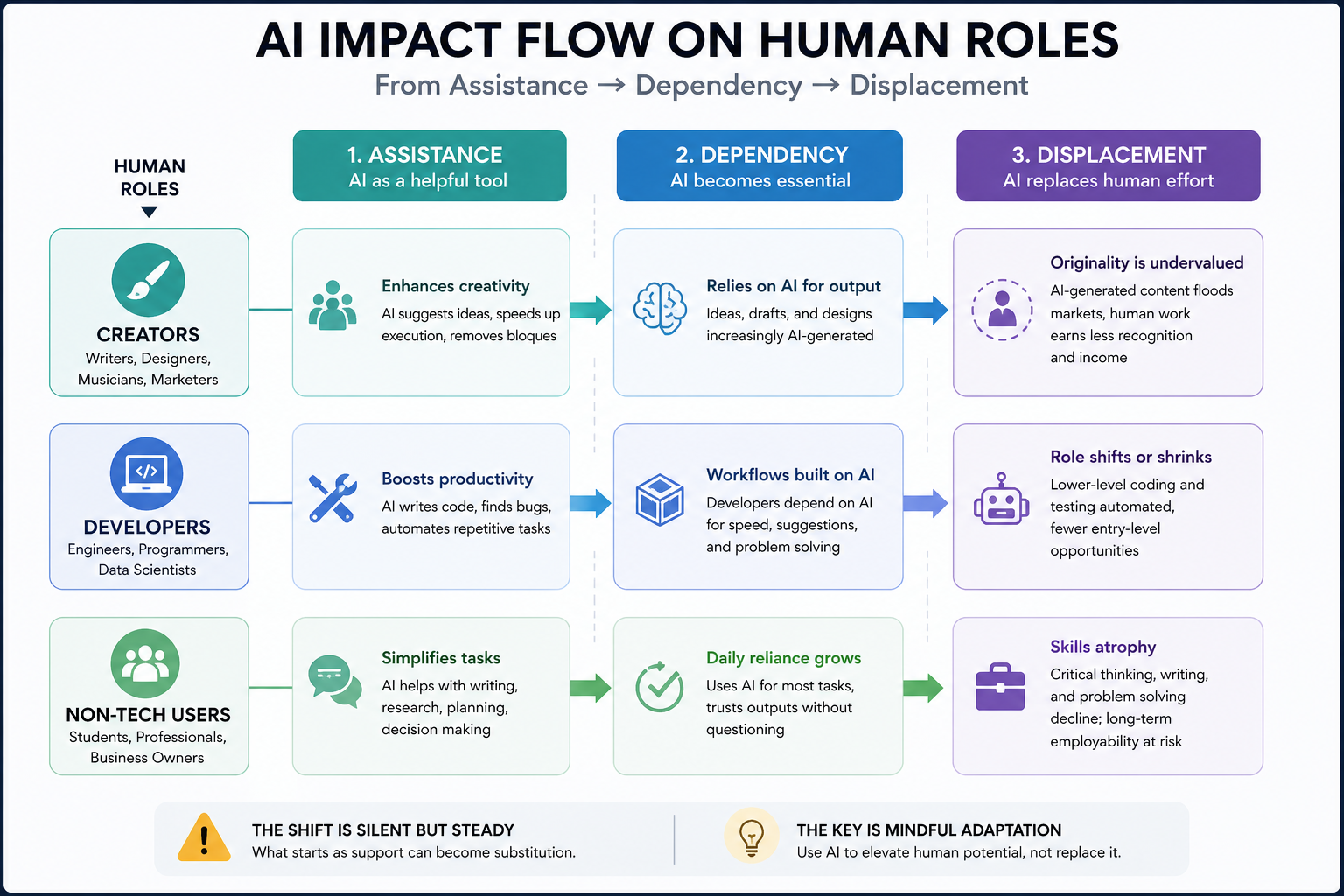
The more we use these systems, the less we notice where the boundary is. The line between assistance and replacement does not disappear all at once. It fades.
At first, you use AI to help you think. Then it starts thinking for you. Eventually, you start accepting its output without questioning how you would have arrived there yourself, and that is where the illusion lives.
Not in the technology itself, but in our belief that we are still fully in control of how it shapes us.
The Reality Shift
The truth about AI is not loud. It does not arrive with a clear signal. It creeps in.
A junior developer stops writing boilerplate code because the model does it faster. A content writer edits instead of creates. A researcher spends more time verifying outputs than forming original questions.
None of these feel like losses at first.
But something changes when the process changes. When the act of doing is replaced by the act of checking, the relationship to the work shifts.
You are no longer building from first principles. You are reacting to generated possibilities.
And over time, that does something to how you think.
The impact of artificial intelligence is not just about what it can do. It is about what it quietly teaches us to stop doing.
We are optimising for output, but we are slowly outsourcing the struggle that made that output meaningful.
And without that struggle, something gets lost.
Not immediately. Not obviously.
But undeniably.
The Human Cost
We often talk about jobs when we talk about the risks of AI. Roles disappearing. Industries changing. Skills becoming irrelevant.
But the deeper cost is harder to measure.
It is the shift in identity.
A designer who no longer feels like a creator, but a curator of machine generated ideas. A developer who questions whether they understand the systems they are building or just the prompts that generate them. A writer who reads something brilliant and wonders if it still counts when it was not entirely theirs.
These are not economic questions, they are personal ones.
They sit quietly in the background, showing up in moments of doubt.
You start asking yourself different questions.
Am I still good at this, or am I just good at using the tool?
Would I have come up with this on my own?
If the tool disappears, what remains?
The AI and human future conversation often focuses on capability. But capability is only part of the story.
Meaning matters too and meaning is fragile.
The Builder’s Dilemma
There is a particular kind of tension that comes from building something you do not fully understand the consequences of. I have felt it.
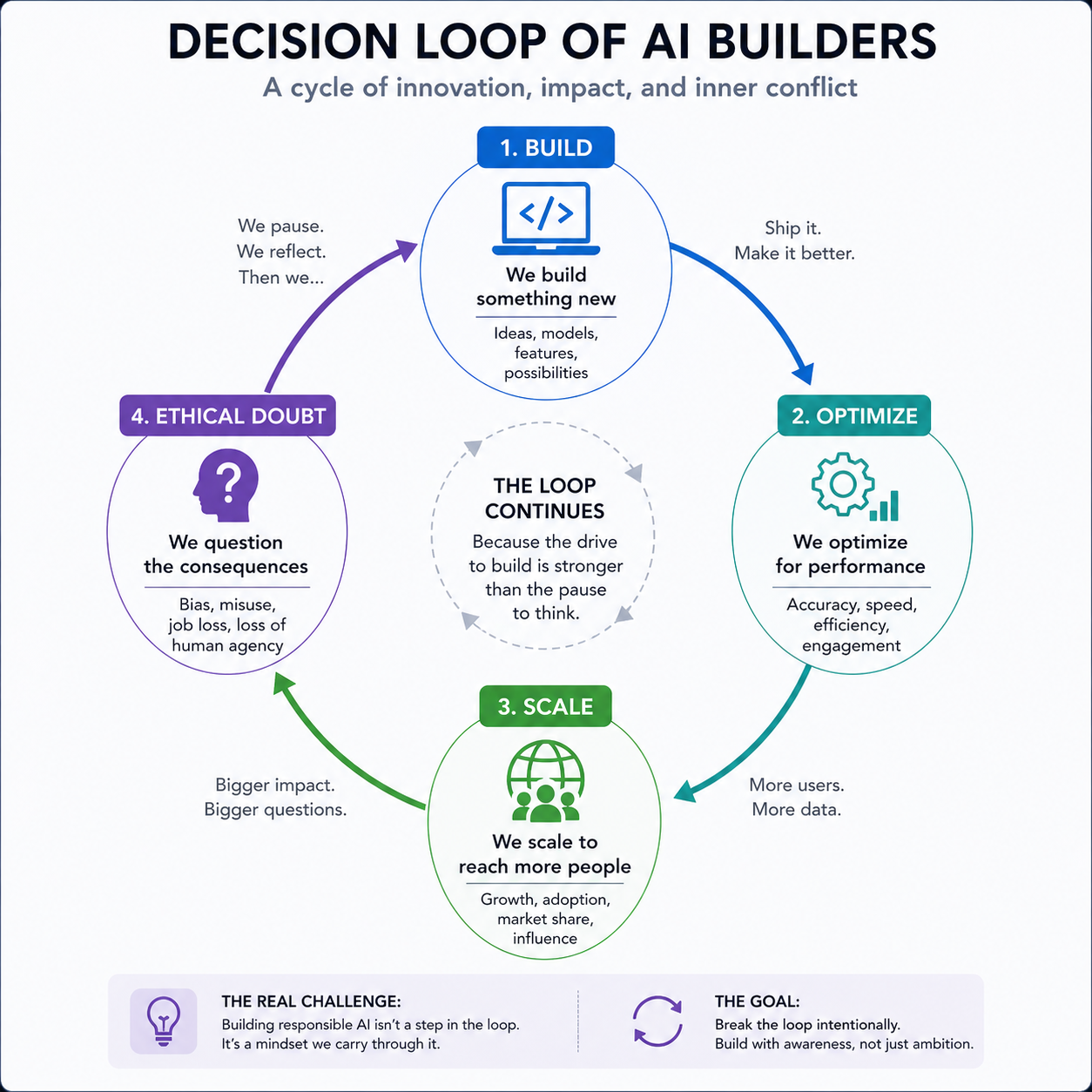
You start with curiosity. You want to see what is possible. You push boundaries. You optimize performance. You reduce latency. You make the system better and it works.
That is the problem.
Because the better it works, the less space there is for the person who used to do that work.
You tell yourself it is progress. That this is how technology has always evolved. That new tools create new opportunities and that is true.
But it is not the whole truth.
There is a difference between building something that changes how people work and building something that replaces why they work.
As a builder, you sit in the middle of that tension.
You are rewarded for making systems more capable. Faster. Smarter. More autonomous.
But every improvement brings a quiet question with it.
Should this exist in this form?
Not in a dramatic, world ending sense. Just in the small, practical ways that shape everyday life.
You rarely stop building because of that question.
But you do not ignore it either.
It stays with you.
The Unscripted Truth
The unscripted truth about AI is this:
We are not just building tools. We are reshaping what it means to think, to create, and to contribute.
And we are doing it faster than we are understanding it.
The conversation around AI reality vs hype often swings between extremes. Either it is the greatest invention of our time or the beginning of something we cannot control.
The truth sits somewhere in between, but it is not comfortable.
AI is powerful. It is useful. It is transformative.
But it is also quietly redistributing agency.
Every time we defer a decision, accept a generated answer, or rely on a system to do what we used to do ourselves, we shift a small piece of control away from us.
Not entirely. Not irreversibly.
But enough to matter.
The risk is not that AI becomes more intelligent than us.
The risk is that we become less engaged in the act of thinking.
Closing Reflection
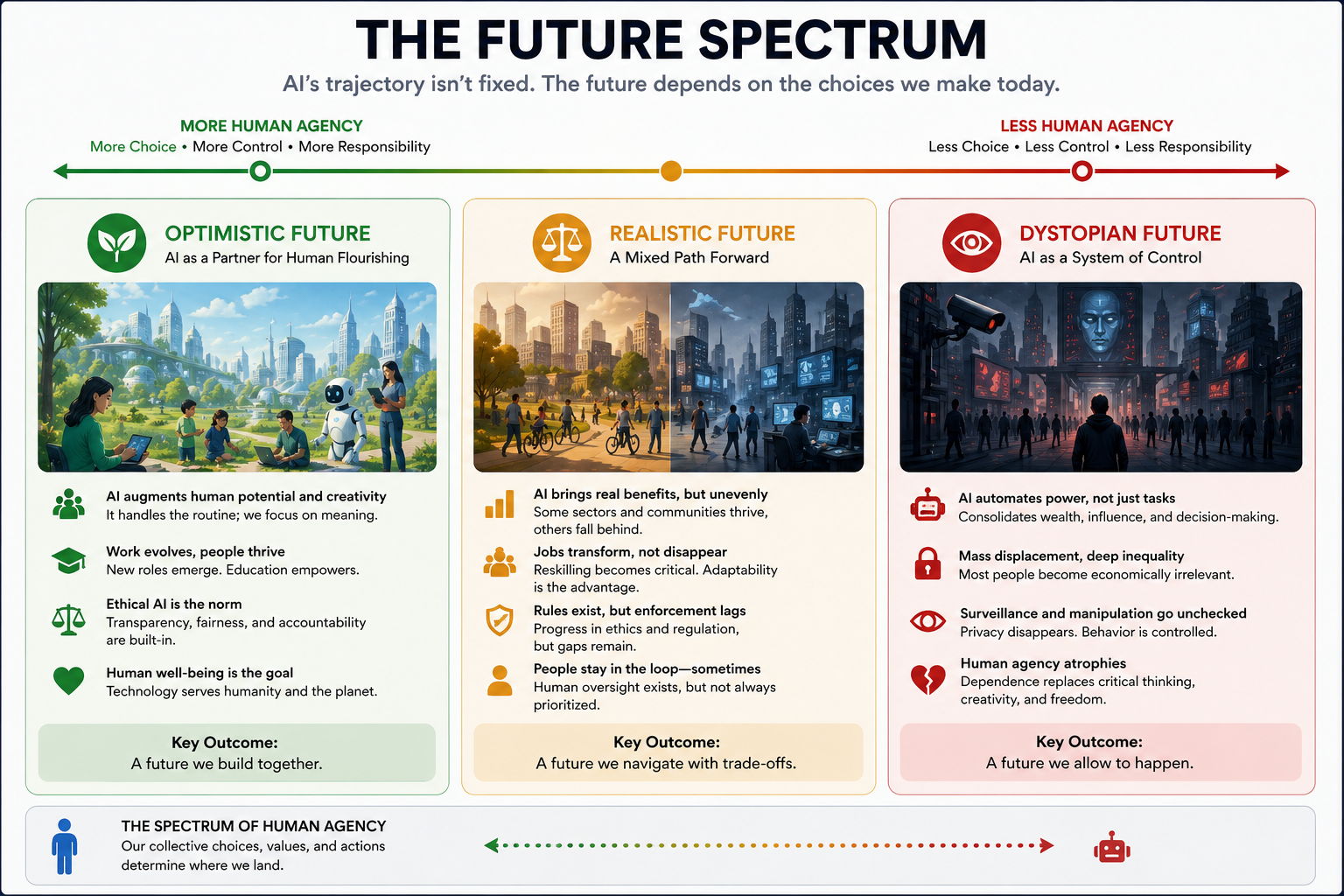
There is a version of the future where AI amplifies everything good about human creativity and intelligence.
There is another where it slowly replaces the parts we thought were uniquely ours.
Most likely, we are heading toward something in between.
Maybe that is the part we do not talk about enough.
Not whether AI will take over.
But whether, in the process of building it, we quietly hand over more of ourselves than we intended.
Because the real question is not what AI becomes.
It is what we become in response to it.