



 Certifiedunder the Multi-Agent System module in the Mastering AI Agents program.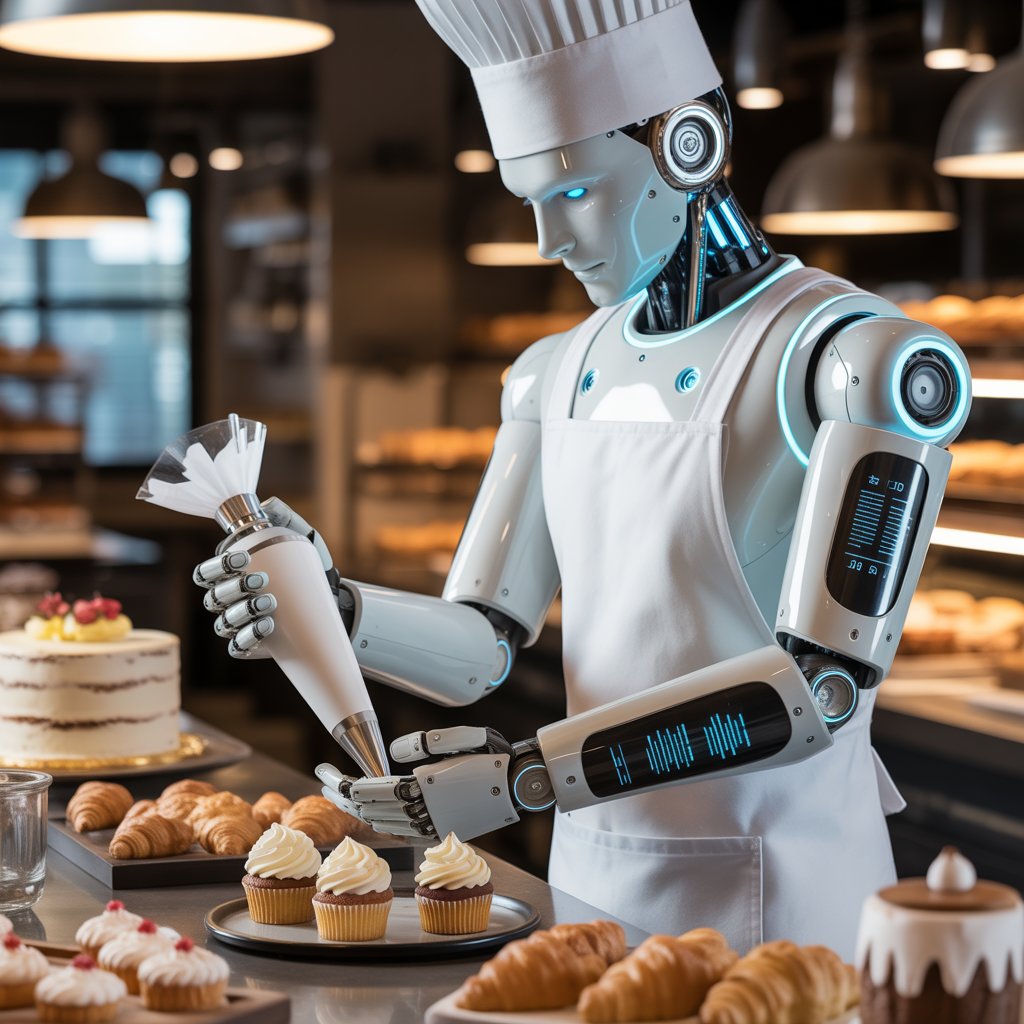
Ce projet déploie un écosystème d'IA collaboratif où chaque agent joue un rôle clé : un Chef (RAG) conçoit des recettes sur mesure, un Gestionnaire (Tavily) analyse les coûts et le marché en temps réel, et un expert Qualité assure la sécurité alimentaire. Propulsé par LangGraph pour la gestion d'état et ChromaDB pour la mémoire documentaire, le système transforme une simple idée en un rapport commercial complet et prêt à l'emploi. Une démonstration concrète de la puissance des agents autonomes au service de l'artisanat.
Ce projet consiste en la création d'un système multi-agents intelligent dédié à l'industrie de la boulangerie-pâtisserie. Contrairement à un simple chatbot, il orchestre plusieurs "experts" virtuels qui collaborent pour transformer une idée de produit en un plan d'exécution complet.
Concrètement, le projet repose sur trois piliers :
L'Expertise Culinaire (Agent Chef) : Il utilise le RAG (Retrieval-Augmented Generation) pour puiser dans une base de connaissances technique et générer des recettes précises et structurées.
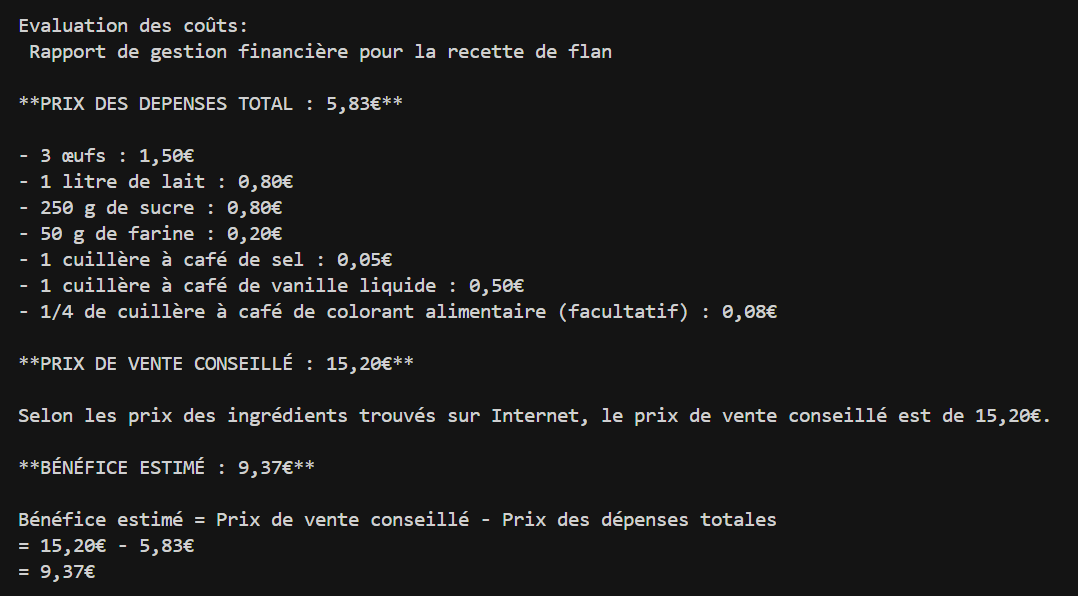
L'Analyse de Marché (Agent Gestionnaire) : Grâce à l'outil Tavily, cet agent se connecte au web en temps réel pour récupérer les prix actuels des ingrédients et calculer la rentabilité (coûts, marges, prix de vente).
La Sécurité Alimentaire (Agent Qualité) : Il analyse la proposition finale pour identifier les allergènes et garantir la conformité aux normes d'hygiène.
L'ensemble est piloté par LangGraph, qui gère le flux de travail et l'état de la conversation, assurant une transition fluide et logique entre la conception, le calcul financier et la vérification de sécurité.
C'est un outil d'aide à la décision puissant, capable d'accompagner aussi bien un artisan qu'un entrepreneur dans la création de nouveaux produits.
🛠️ Cœur de l'Orchestration
🧠 Intelligence & Modèles
Groq : Le moteur d'inférence (LLM) qui alimente tes agents. Groq permet d'obtenir des réponses extrêmement rapides, ce qui est crucial pour un système multi-agents où plusieurs appels sont faits à la suite.
ChromaDB : Notre base de données vectorielle. Elle stocke les documents techniques sur la boulangerie et permet à l'agent Chef de faire du RAG (Retrieval-Augmented Generation) pour trouver des informations fiables au lieu d'halluciner.
🌐 Outils & Monitoring
Le projet suit un flux de travail rigoureux, de l'indexation des connaissances à l'exécution multi-agents :
Préparation des documents – Stockage de vos manuels de pâtisserie et fiches techniques dans le répertoire data.
Indexation Vectorielle (RAG) – Découpage des textes en segments (chunks) et transformation en vecteurs stockés dans ChromaDB pour une recherche sémantique rapide.
Initialisation du StateGraph – Configuration de LangGraph pour définir l'état partagé (BakeryState) et l'ordre de passage entre les agents.
Orchestration du Chef – L'agent Chef interroge la base vectorielle pour extraire le contexte métier et générer une recette techniquement exacte.
Recherche de Marché (Action Tooling) – L'agent Gestionnaire utilise Tavily pour naviguer sur le web, récupérer les prix réels des ingrédients et calculer la viabilité économique.
Audit de Sécurité (Raisonnement) – L'agent Qualité analyse la sortie combinée du Chef et du Gestionnaire pour valider les allergènes et la conformité.
Synthèse Finale & Monitoring – Consolidation de toutes les analyses dans un rapport unique, avec un suivi complet de chaque étape via LangSmith pour garantir la transparence du processus.
bakery-multiagentic-ai-system
├── src/
│   ├── app.py                          # Main RAG application
│   ├── vectordb.py                     # Vector database wrapper
|    └── state.py
│   ├── agents/                               # List of agents
│       ├── chef.py
│       ├── inventorymanager.py
│       └── quality.py
├── data/                               # Sample publications
│   ├── recette_brownies_chocolat.txt
│   ├── recette_flan_patissier.txt
│   └── recette_gateau_vanille.txt
├── .gitignore
├── LICENSE
├── README.md             # This guide
└── requirements.txt      # All dependencies included
Clone le repository:
git clone https://github.com/ibrahimasorydiallo1/bakery-multiagentic-ai-system.git
cd bakery-multiagentic-ai-system
Installe les dépendances:
pip install -r requirements.txt

pip install torch torchvision torchaudio --index-url https://download.pytorch.org/whl/cu118
Prépare ta Groq API key:
Crée un fichier .env à la racine du projet et stocke API key dans .env:
GROQ_API_KEY=the-api-key-here
Lien pour générer une API key Groq.
Prépare ta clé Tavily
Dans le fichier .env à la racine du projet, stocke
TAVILY_API_KEY=votre_cle_api_tavily
Lien pour générer une API key Tavily.
Prépare ta clé LangSmith
Dans le fichier .env à la racine du projet, stocke
LANGCHAIN_TRACING_V2=true
LANGCHAIN_ENDPOINT=https://api.smith.langchain.com
LANGCHAIN_API_KEY=votre_cle_api_langsmith
LANGCHAIN_PROJECT=Bakery-Agentic-RAG
LANGCHAIN_WORKSPACE_ID=votre_id
Lien pour générer une API key LangSmith.
Le système repose sur une orchestration de trois agents spécialisés qui collaborent pour transformer une simple question de pâtisserie en une fiche technique et commerciale complète.
Le processus suit une séquence logique de traitement de l'information :
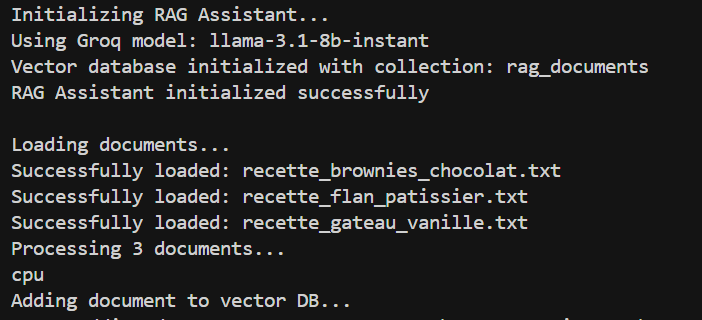
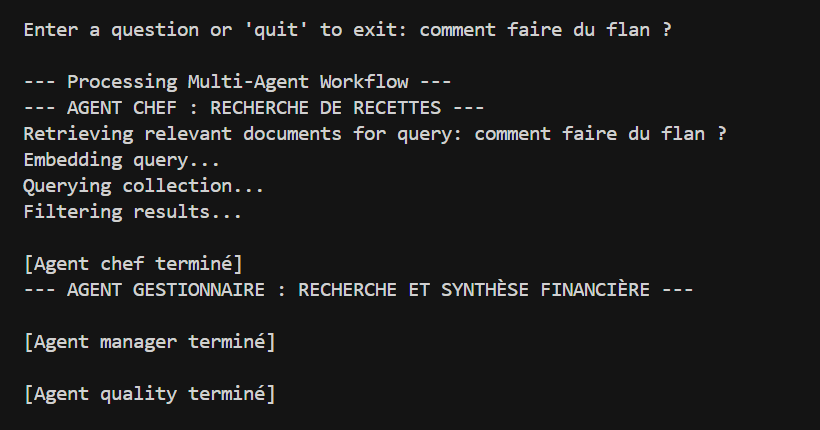
* **Rôle** : Expert technique en pâtisserie.
* **Action** : Effectue une recherche sémantique dans la base de données vectorielle (**ChromaDB**).
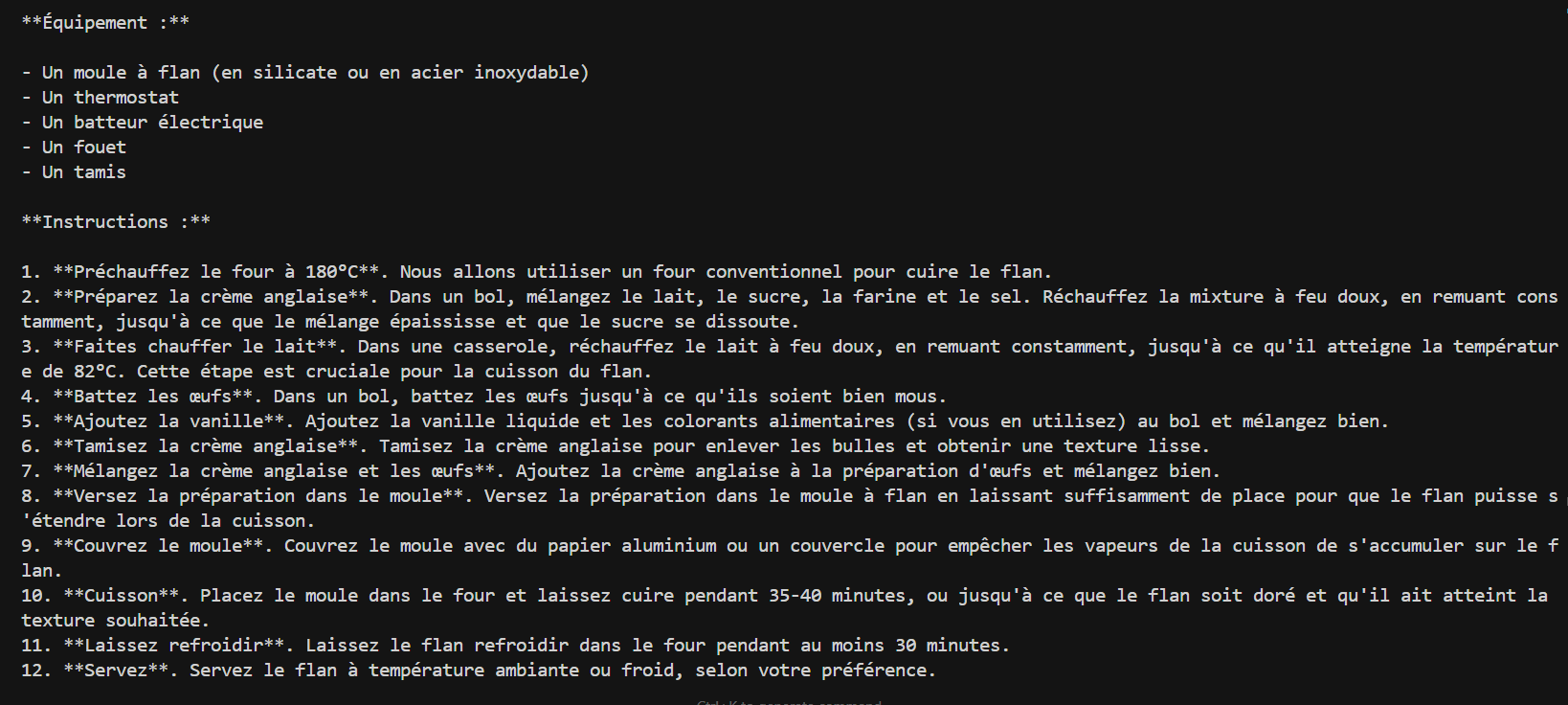
* **Résultat** : Génère une recette authentique basée sur les documents locaux, incluant les ingrédients, les étapes de préparation et des conseils de pro.
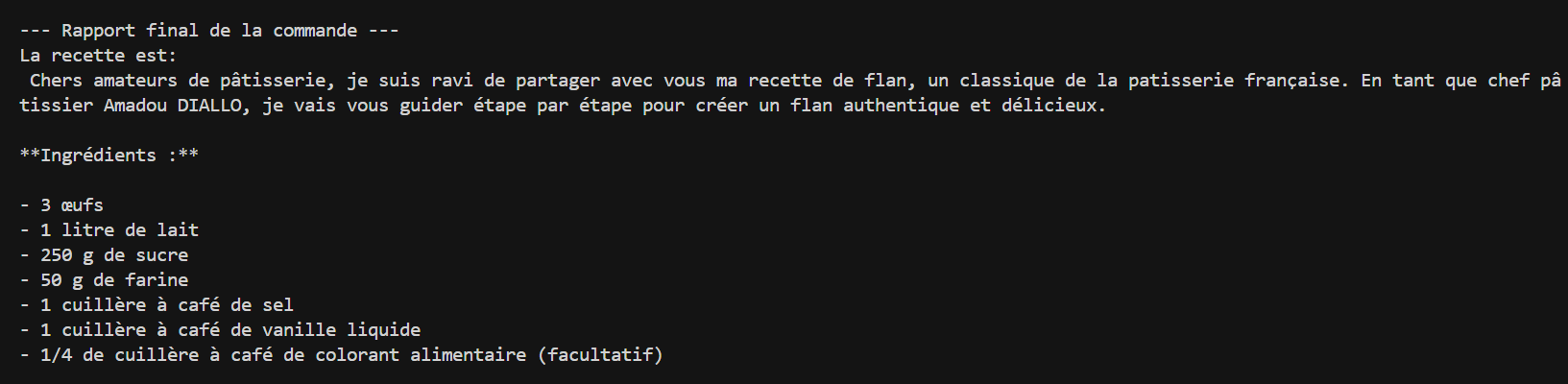



| Étape | Contenu Généré |
|---|---|
| Recette | Instructions détaillées (ex: Flan pâtissier traditionnel) |
| Finance | Calcul de marge (ex: Coût 5,83€ / Vente 15,20€) |
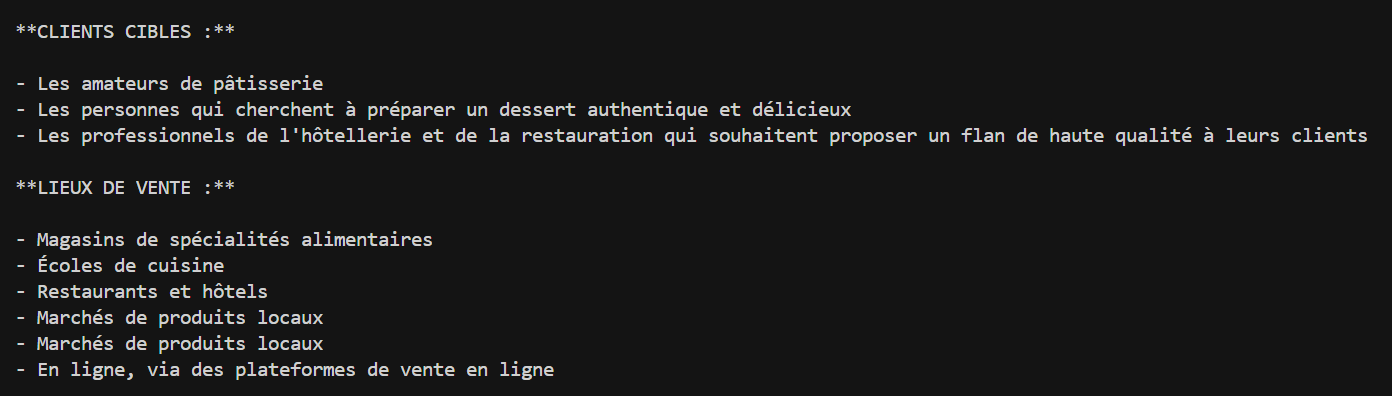
| Marketing | Identification des lieux de vente et segments clients |
| Sécurité | Identification systématique des allergènes |
Ce workflow garantit une réponse qui n'est pas seulement créative, mais aussi viable commercialement et sécurisée sur le plan sanitaire.
Les systèmes d'IA en production nécessitent une protection robuste contre les entrées malveillantes et les sorties problématiques. Ce système implémente une validation complète à plusieurs niveaux.
La couche de sécurité analyse toutes les requêtes et entités cibles avant le début du traitement :
Lorsque la validation détecte des entrées interdites, le système rejette immédiatement la requête avec un message d'erreur spécifique. Cette approche "fail-fast" permet d'économiser les ressources de calcul face aux entrées malveillantes tout en fournissant aux utilisateurs un retour clair sur la raison du rejet.
Le filtre de sortie examine toutes les réponses des agents avant leur affichage :
Je fournis ici quelques captures d'écran de mon workspace langsmith pour vous montrer les performances et métriques du système complet.
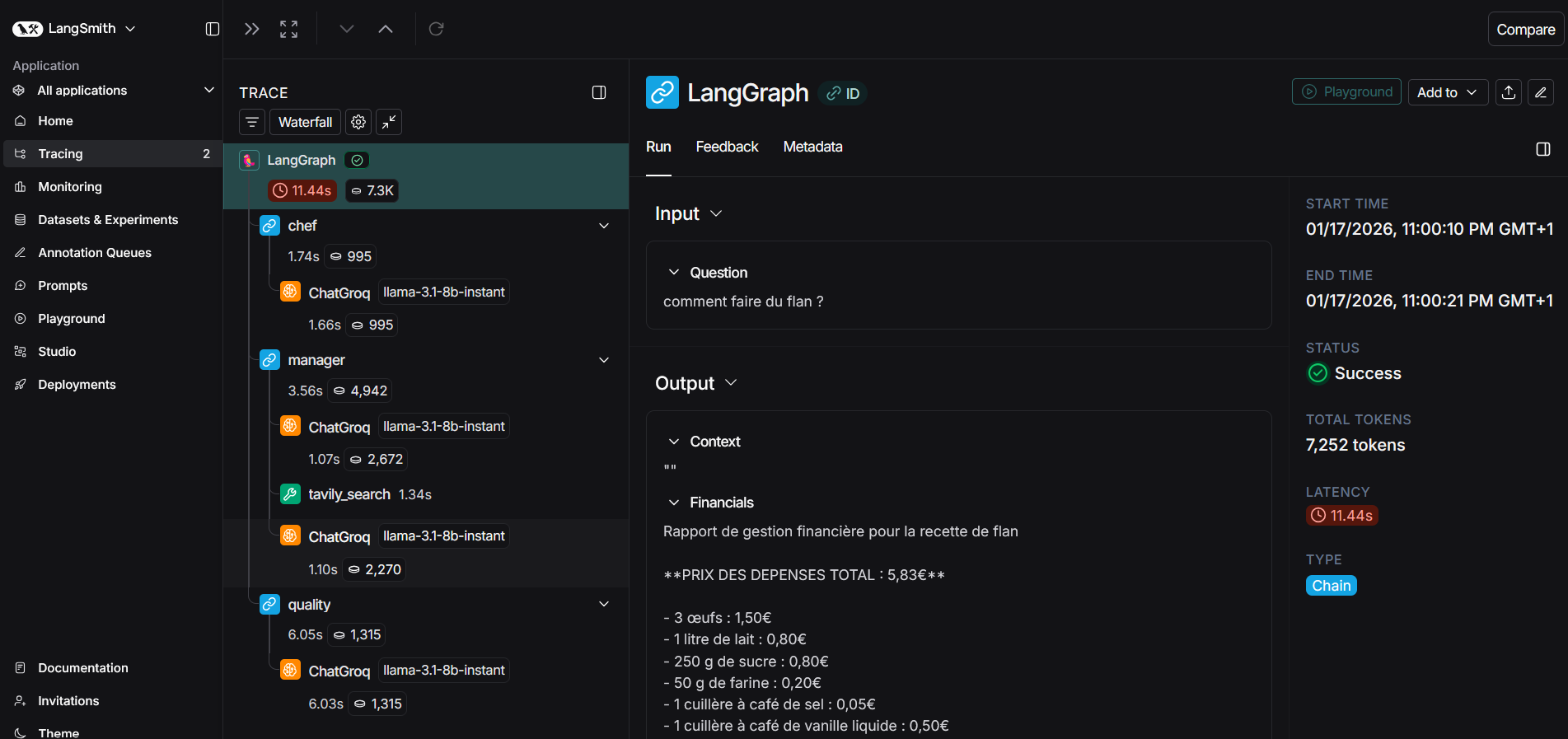
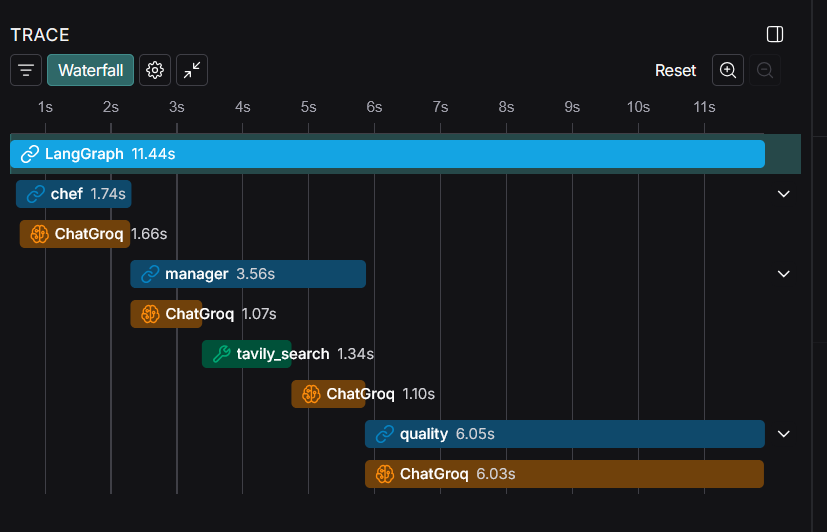
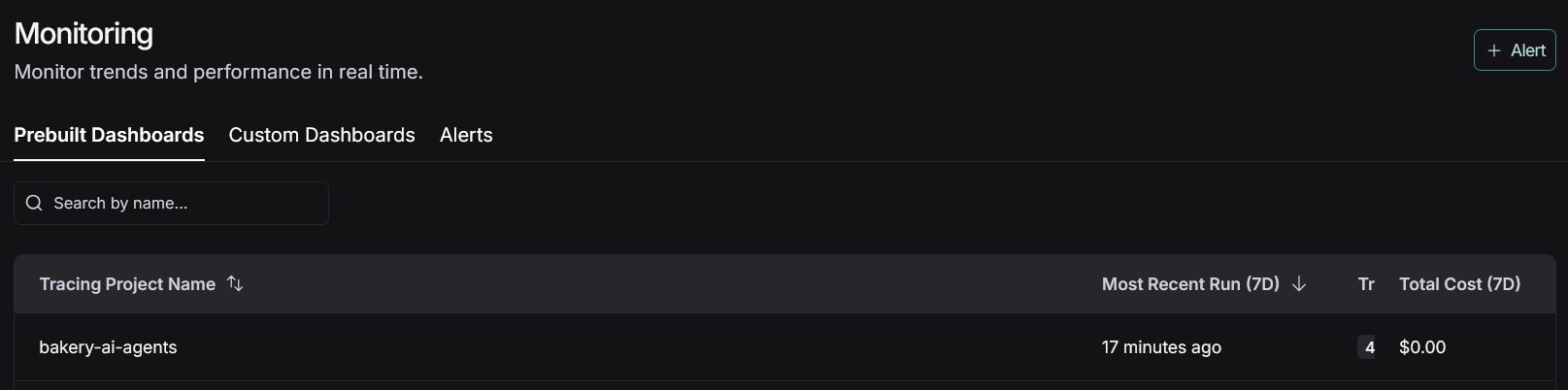
Dans cette dernière capture d'écran, nous pouvons observer qu'on a l'information sur les coûts associés en fonction des crédits consommés. Ce qui est super pour les finops !!
Ce projet démontre comment l'intelligence artificielle peut sortir du cadre purement conversationnel pour devenir un véritable outil opérationnel. En orchestrant des agents spécialisés capables de manipuler des données métier (RAG) et d'interagir avec le monde réel (Tavily), nous passons d'une IA qui "discute" à une IA qui "exécute".
Le Bakery Intelligence System n'est qu'une première étape vers l'automatisation intelligente de l'artisanat. Plusieurs pistes d'évolution sont envisageables :
Expansion du Marketing : Ajout d'un agent capable de générer des visuels produits (via DALL-E) et des publications pour les réseaux sociaux.
Gestion des Stocks : Connexion à des API de fournisseurs pour passer commande automatiquement dès qu'une recette est validée.
Optimisation Énergétique : Analyse des temps de cuisson pour réduire l'empreinte carbone et les coûts d'électricité.
En combinant LangGraph et la puissance des LLMs, ce projet ouvre la voie à une nouvelle génération d'assistants capables de comprendre la complexité d'un métier tout en garantissant une précision technique et financière.
Ce projet est publié sous la Licence MIT, offrant une flexibilité maximale pour l'utilisation, la modification et la distribution.
Autorisations : La licence MIT accorde aux utilisateurs le droit d'utilisation commerciale sans restrictions ni redevances, la modification et la création d'œuvres dérivées, la distribution de versions originales ou modifiées, l'utilisation privée à des fins internes et l'utilisation de brevets pour les implémentations. Les organisations de toute taille peuvent adopter ce projet, l'intégrer dans des produits commerciaux, le modifier pour répondre à des besoins spécifiques et le déployer dans n'importe quel contexte commercial sans contraintes légales ni frais de licence.
Limitations : Le logiciel est fourni « en l'état », sans aucune garantie d'aucune sorte. Aucune responsabilité n'est acceptée pour les dommages ou pertes découlant de son utilisation. Aucun droit de marque n'est accordé au-delà de ceux explicitement énoncés. Ces limitations standard protègent le projet tout en maintenant une large utilisabilité.
Conditions : Les utilisateurs doivent inclure l'avis de droit d'auteur (copyright) original dans les distributions ainsi que le texte de la licence avec les copies du logiciel. Ces exigences minimales garantissent une attribution appropriée tout en permettant une flexibilité maximale de déploiement et de modification.
Le texte complet de la licence se trouve dans le fichier LICENSE à la racine du dépôt. Cette approche permissive maximise l'impact potentiel du projet sur l'accessibilité de l'intelligence d'affaires (Business Intelligence) pour divers contextes organisationnels, des startups aux grandes entreprises.
Ibrahima Sory DIALLO
Etudiant en Bachelor IA / DATA
Disponible sur linkedin https://www.linkedin.com/in/ibrahima-sory-diallo-isd/
Tags:
Retrieval-Augmented Generation (RAG)
Français
French
Agentic AI
LLM Applications
ChromaDB
LangChain
Vector Databases
Document Question Answering
NLP Systems
Generative AI