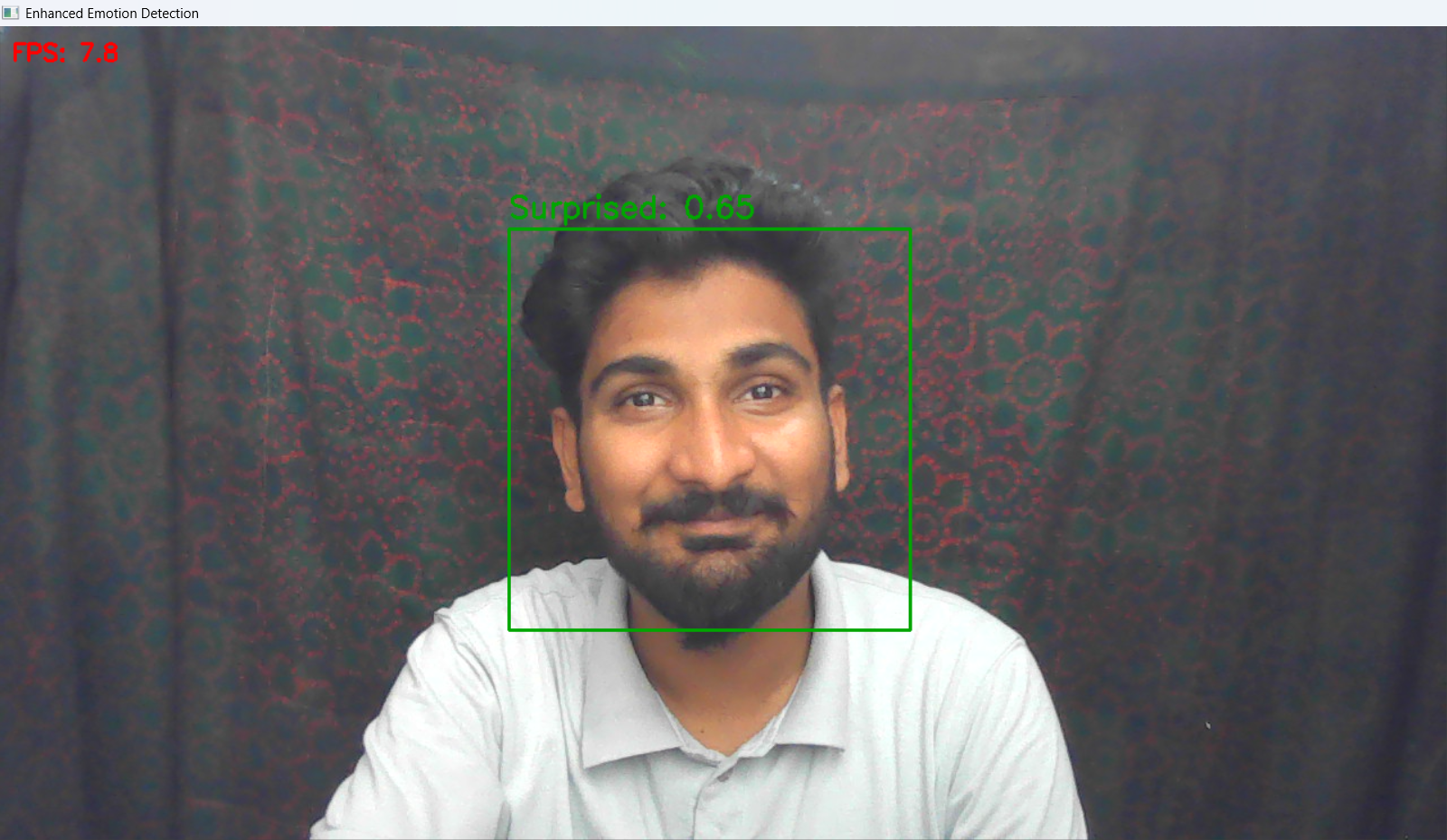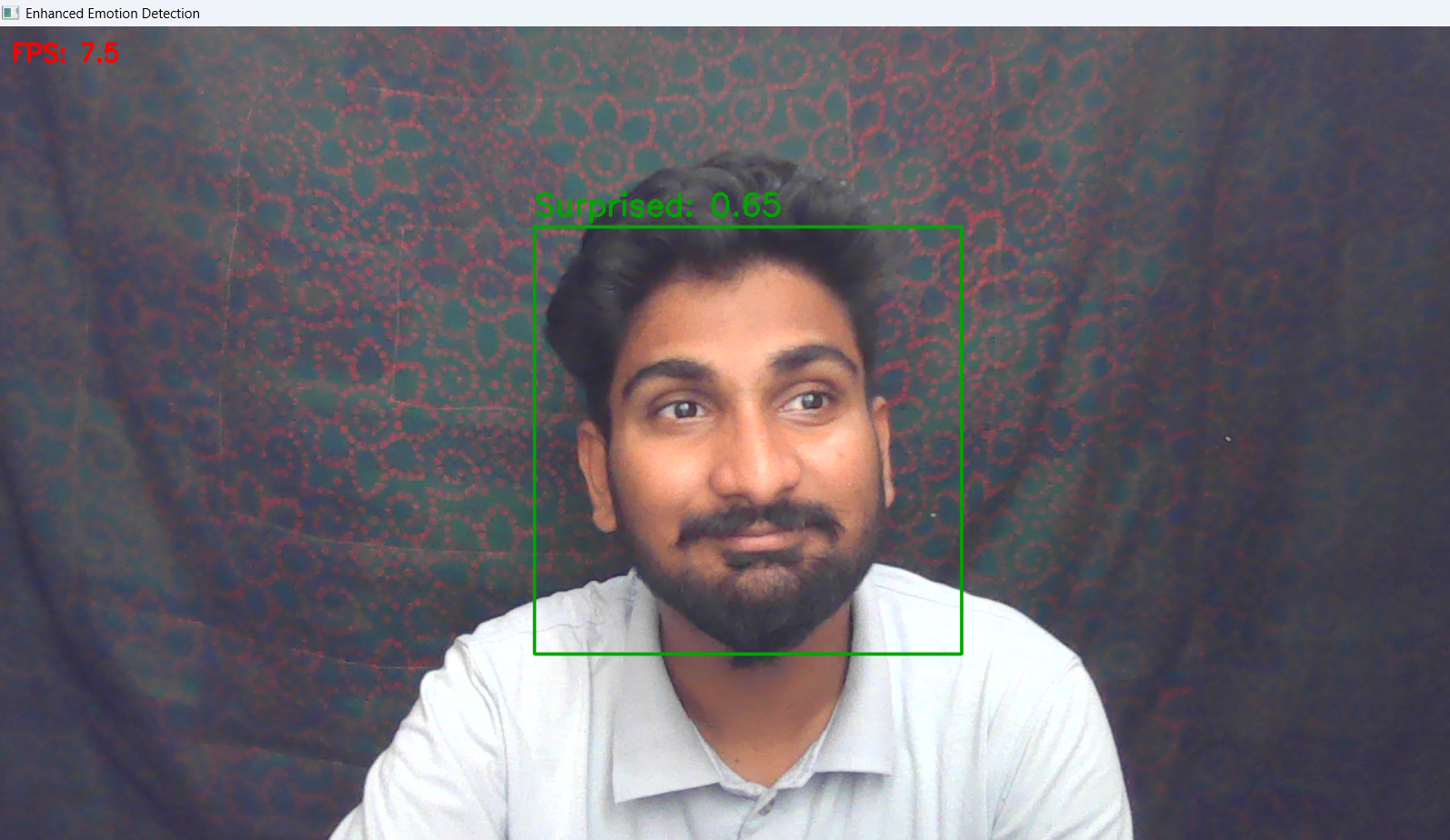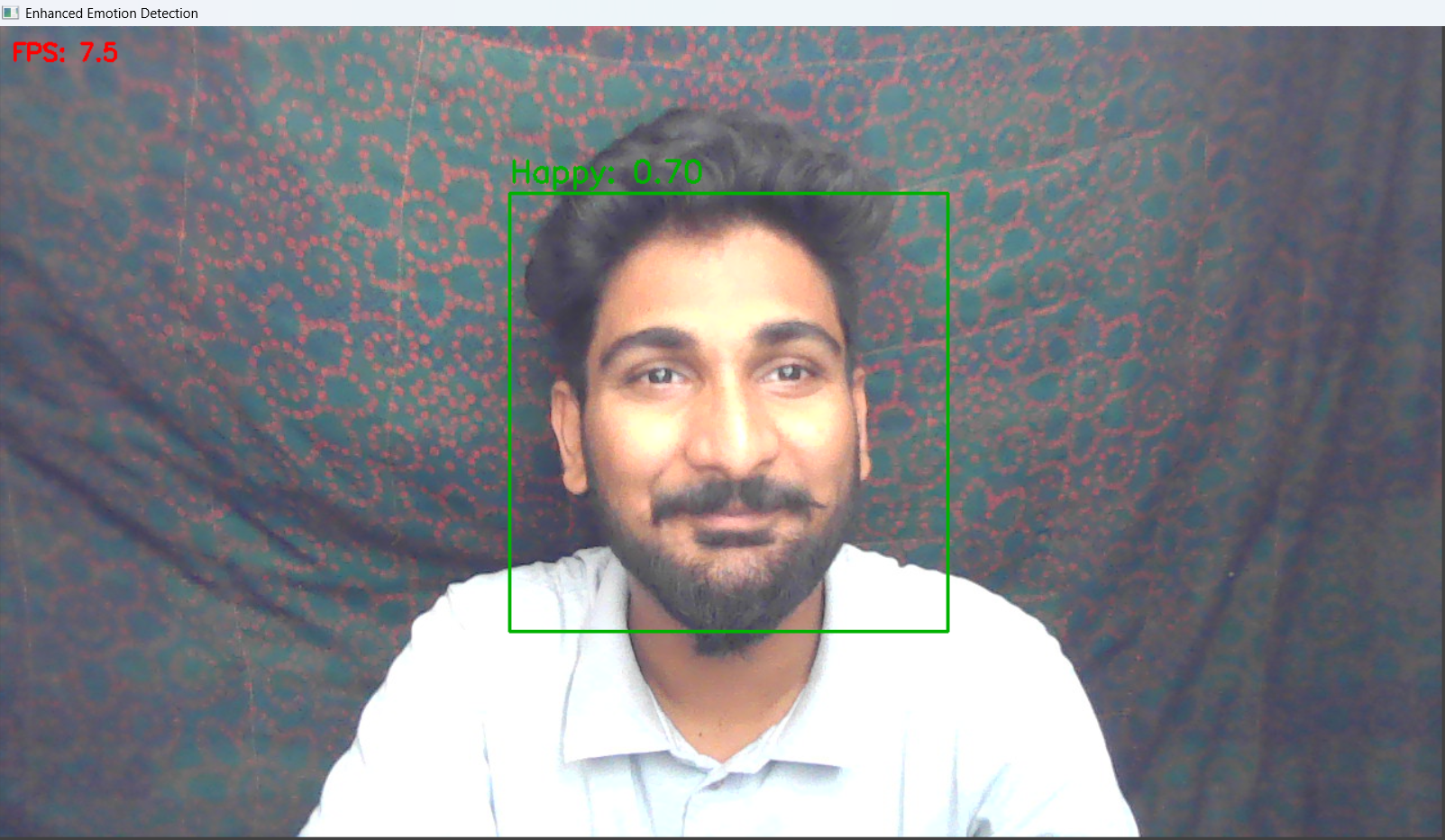



Facial emotion detection is a crucial application of computer vision and artificial intelligence, enabling machines to interpret human emotions based on facial expressions. This project aims to develop an efficient face emotion detection system using deep learning techniques. The system leverages convolutional neural networks (CNNs) to classify emotions such as happiness, sadness, anger, surprise, and neutrality from facial images. The model is trained on a labeled dataset and fine-tuned for real-time emotion recognition.
By integrating OpenCV for face detection and TensorFlow for model implementation, the system can analyze facial expressions from images or live video feeds. This project has significant applications in human-computer interaction, mental health monitoring, and sentiment analysis. The proposed solution enhances emotion-based analytics, offering insights for various industries including marketing, security, and healthcare
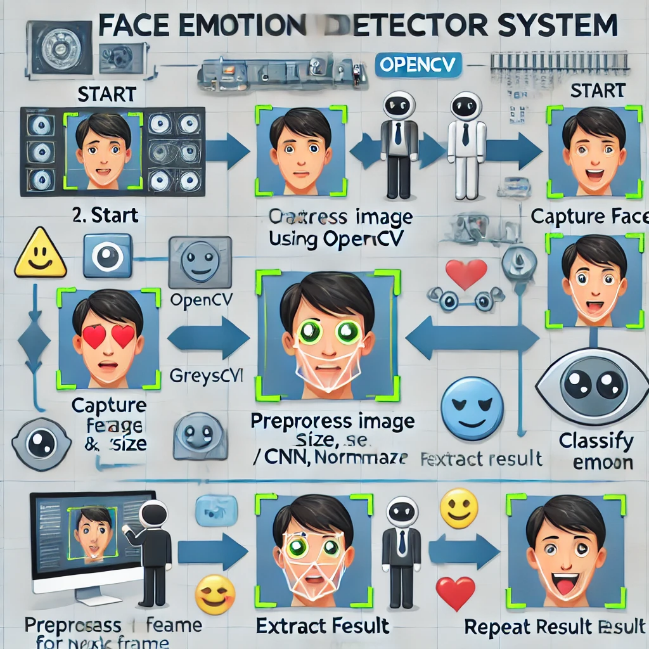
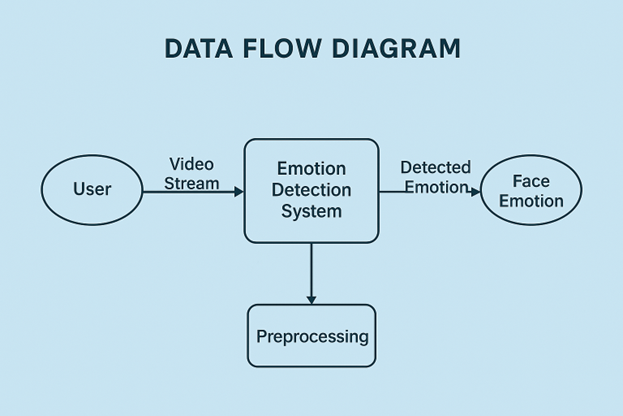
The Face Emotion Detector is designed to capture real-time video input, process facial data, and classify emotions with high accuracy. The core components include a webcam input stream, an image processing module using OpenCV, and an emotion classification model typically based on a Convolutional Neural Network (CNN). The system begins by capturing frames from the live video feed. These frames are processed using OpenCV to detect faces using algorithms like Haar Cascades or pre-trained DNN models. Once faces are detected within a frame, each face is cropped and passed to the emotion detection model, which outputs the predicted emotion label (e.g., happy, sad, angry) along with a confidence score.
The architecture is modular and lightweight, allowing for real-time performance. The detected emotions, along with metadata such as timestamps and optional frame snapshots, can be stored in a local database or file system for future reference. This layered approach—input capture, face detection, emotion classification, and data logging—ensures the system remains scalable and easy to maintain. It is suitable for applications like mood analysis, smart surveillance, or user feedback systems. With OpenCV handling real-time video and Python managing the detection and prediction logic, the system efficiently bridges hardware and AI capabilities in a seamless pipeline.
After successfully running the Face Emotion Detector code, the system was able to capture live video feed from the webcam, detect faces in real time, and accurately classify the corresponding emotions. Each detected face was highlighted with a bounding box, and the predicted emotion label such as Happy, Sad, Surprised, or Neutral was displayed along with its confidence score. The performance was smooth, with minimal lag, and the results were visually overlaid on the video stream. The successful execution confirmed that all modules, from face detection to emotion prediction, worked together seamlessly, demonstrating the effectiveness of the implemented system.