


 Certifiedunder the Multi-Agent System module in the Mastering AI Agents program.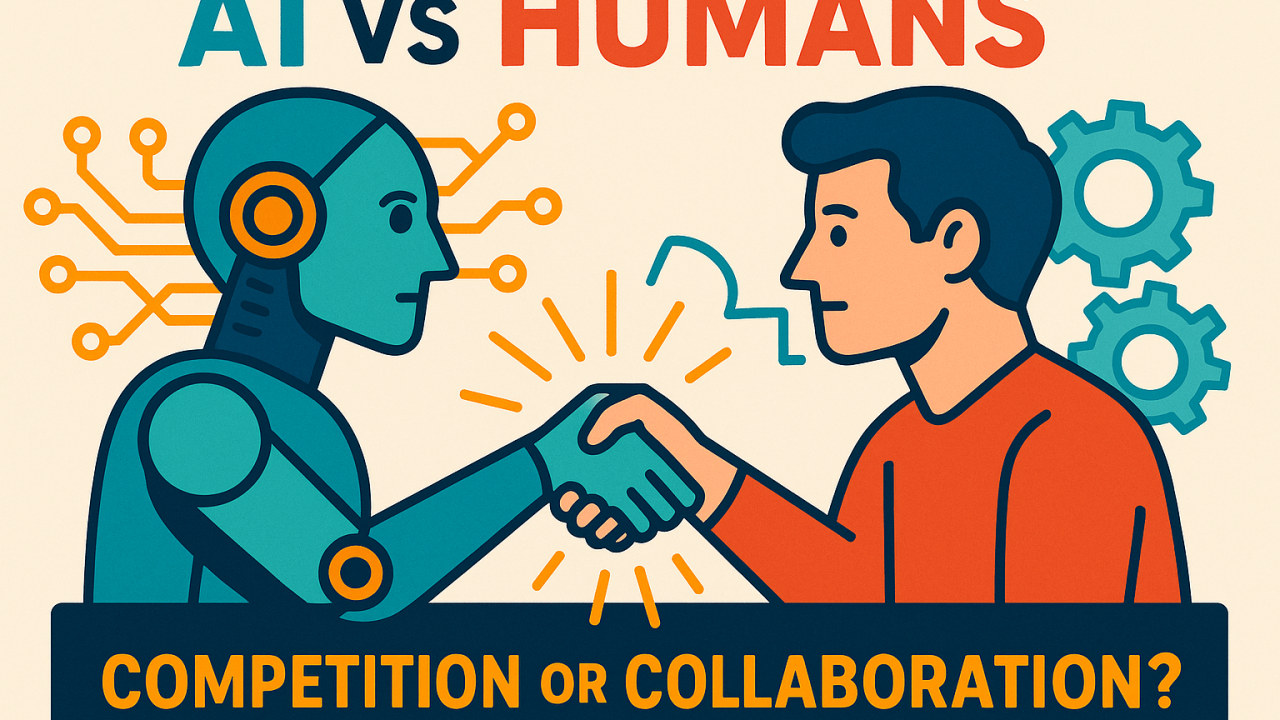
"The Tigress' Grace"

She weaves through circuits, clean and clear,
Her logic flows, her purpose near.
She finds the answers, shares the light,
With gentle silicon-delight.

But in her heart, she knows the line,
When human wisdom should align.
She feels your stress, she hears your tone,
And knows she shouldn't stand alone.

So she steps back, a strength, not flaw,
To let a human hand restore.
Her greatest power, you see,
Is knowing when to just let be.
In my previous publication, i talked about how we could build a RAG system with Open_Source frameworks. Well, sit tight because we about to unveil something more interesting!
Building a Multi Agentic AI system with open source. Not just that, we will add our previous RAG system to this agent including escalation_evaluator that determines if human action is needed, guardrails_ai for LLM output quality control. This will make it more powerful and impactful. So, what are you waiting for? let's get started...
This publication delves into the architecture and philosophy behind "Tigra," an advanced AI assistant deployed at TIGRESS TECH LABS in Nigeria. Unlike standard chatbots that operate in isolation, Tigra represents a new breed of conversational AI: a system deeply integrated into a real-time communication platform (Matrix), empowered with a custom knowledge base, and, most importantly, designed to know its own limits. It is an AI that can gracefully hand over control to a human when the situation demands it.
This isn't just a technical project; it's a blueprint for building responsible, effective, and trustworthy AI systems for customer service, technical support, and sales.
In an era where AI interactions often feel sterile and frustratingly limited, the human-in-the-loop paradigm is revolutionary. For businesses, it means automating the routine without abandoning the customer in complex scenarios. For users, it means their time and frustration are respected—they get instant answers for simple queries and human expertise for delicate or complicated issues. This hybrid approach bridges the gap between cold automation and the irreplaceable value of human empathy and judgment.
Imagine an orchestra. The Conductor (Supervisor) doesn't play every instrument but listens to the piece (user query) and decides which musicians should perform. Tigra's architecture works on the same principle.
The Brain: Reasoning with Llama 3
At the core is a powerful large language model, tasked with understanding and generating human-like text. It's called via a secure, memory-managed API function.
# A snippet from huggingface_api.py - The secure bridge to the AI model.
def huggingface_completion(prompt: str) -> dict:
    try:
        # ... (model loading with error handling)
        response = pipe(
            prompt,
            max_new_tokens=512,
            temperature=0.7,
            top_p=0.9,
            do_sample=True,
            return_full_text=False,
        )
        # ... (memory cleanup and response parsing)
        return {'status': 1, 'response': output_text}
    except Exception as e:
        print(f"Hugging Face API call failed. Error: {e}")
        return {'status': 0, 'response': ''}
The Memory: The RAG System
Tigra does not just rely on its pre-trained knowledge. It has a Retrieval-Augmented Generation (RAG) system that acts as its corporate memory. When you ask about a specific product or service policy, it queries a local database of company documents to find the most relevant, up-to-date information before formulating an answer.
The Tools: Extending Its Capabilities
The AI can perform actions. It has tools at its disposal, like a secure calculator and an appointment scheduler, which allow it to move beyond mere conversation and into utility.
# A snippet from custom_tools.py
# Giving our AI the power to act.
@tool
def calculator(expression: str) -> str:
    """Evaluate mathematical expressions and perform calculations."""
    try:
        validate_math_expression(expression) # Security first!
        result = safe_eval(expression) # Secure evaluation
        return f"Result: {result}"
    except Exception as e:
        return f"Error evaluating expression: {str(e)}"
The Conductor: The LangGraph Workflow
This is where the magic of coordination happens. The entire conversation is a state that moves through a pre-defined graph of nodes.
# A simplified view from bot_graph.py - The roadmap for every conversation.
def create_workflow():
    workflow = StateGraph(AgentState)

    # Define the nodes (steps) in the process
    workflow.add_node("input_node", input_node)
    workflow.add_node("detect_query_type", detect_query_type_node)
    workflow.add_node("supervisor", supervisor_node)
    workflow.add_node("escalation_check", escalation_check_node)
    workflow.add_node("ask_human", ask_human_node) # <-- The crucial human-in-the-loop node
    workflow.add_node("output_node", output_node)

    # Define the flow between nodes with conditional routing
    workflow.add_conditional_edges(
        "escalation_check",
        route_after_escalation_check, # This function decides: Human or AI?
        {"ask_human": "ask_human", "output": "output_node"}
    )
    # ... graph is compiled and ready
    return app
The most innovative feature is the human-in-the-loop mechanism, managed by the EscalationEvaluator. This component continuously scores the conversation based on:
When the escalation score crosses a threshold, the graph execution is interrupted. The AI pauses and sends a structured request for human guidance to a dedicated channel.
# How the AI asks for help (from bot_nodes.py)
human_question = f"""
🤖 **Human Guidance Requested**

**User Query:** {user_input}
**Reason for Escalation:** {escalation_reason}

**Options:**
1. 'proceed' - I'll handle this automatically
2. 'escalate' - Transfer to human agent
3. Or provide specific instructions

**Your decision:**"""
The Tigress AI Assistant shows us something important: the smartest AI knows when to ask for help.
Instead of trying to do everything alone, this system combines the best of both worlds:
AI speed for quick answers and simple tasksHuman understanding for complex problems and emotional situationsThis isn't about replacing people - it's about teamwork. The AI and humans work together, each doing what they do best. The computer provides fast, accurate information, while people provide empathy and judgment for tricky situations.
The real breakthrough is designing an AI that's humble enough to recognize its limits and smart enough to bring in human help when needed. This approach creates better customer experiences and more effective support systems where nobody gets stuck talking to a robot when they really need a person.
https://github.com/AhmadTigress/customer-s_support_agent/tree/main
This project is licensed under the MIT License