



Based on what I've found in my industry, there is a lack of datasets in the engineering field to train big models for my own industry. This is because the knowledge in the engineering domain is in the form of reports, standard specifications, technical guidelines or more complex engineering diagrams, not in the form of datasets QA that can be used for training, in contrast to the medical and legal domains, where a large number of consultation records and legal counseling datasets, where Q&A pairs can be used to fine-tune the training of large models.
View more in my github:
AutogenQA
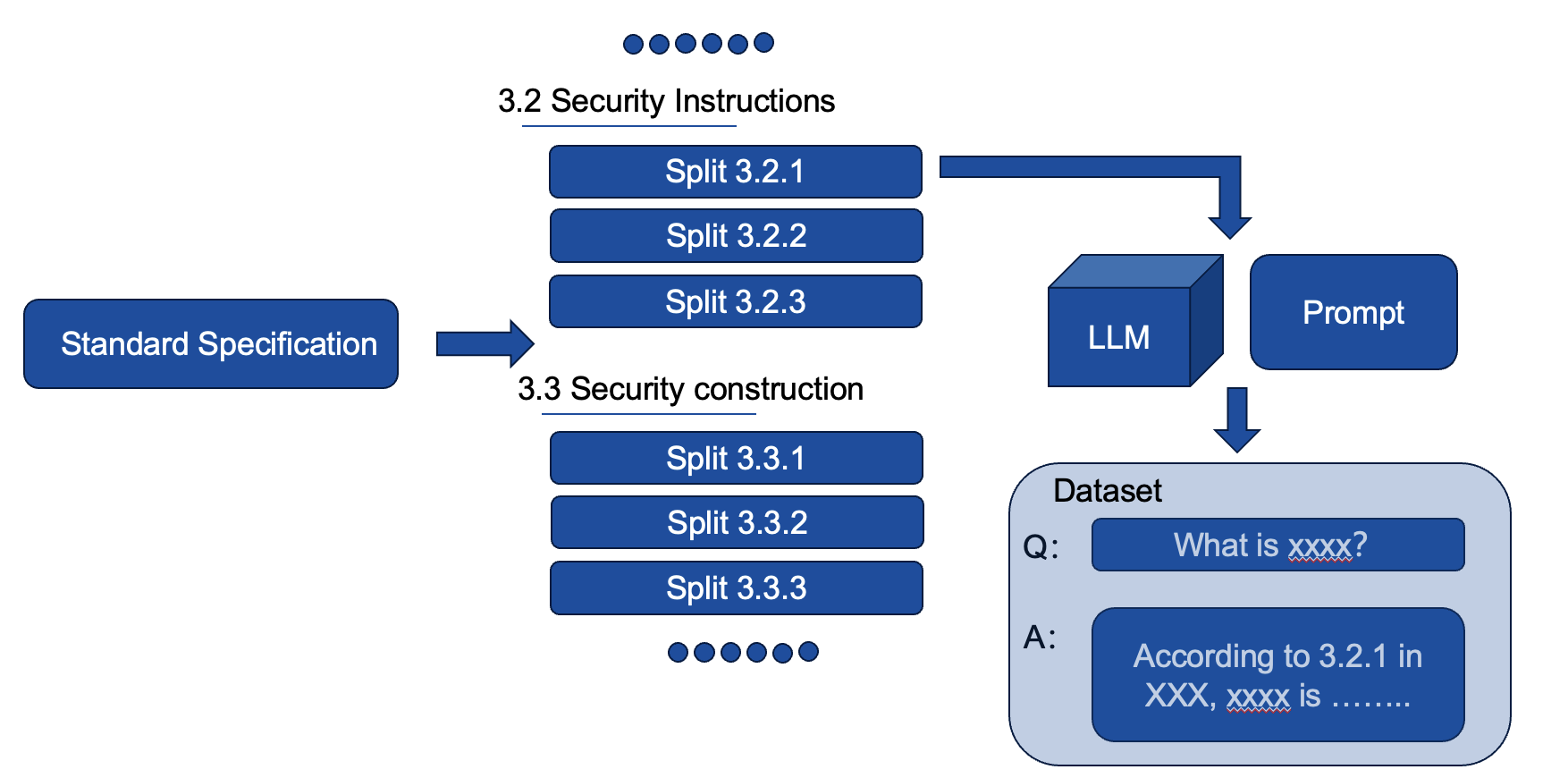
When I want to train LLMs in the engineering domain, I have to start with a Standard Specification
, so that the LLM models can think like engineers and have the relevant knowledge. But the standard specifications are all presented in the form of a line by line, and there are no Q&A pairs, so we need to organize all of these standards into a Q&A format, but this will consume a lot of human and material resources. So I developed a platform that can generate Q&A pairs by using big models, and provide evaluation and annotation functions to ensure that the quality of Q&A pairs can meet the requirements.
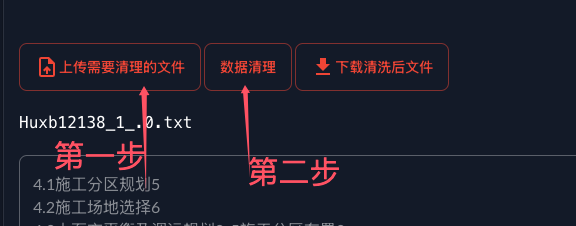
Using the open source python visualization tool Taipy, I made a visualization platform for production QA.
##Page 1
##Page 2
##Page3
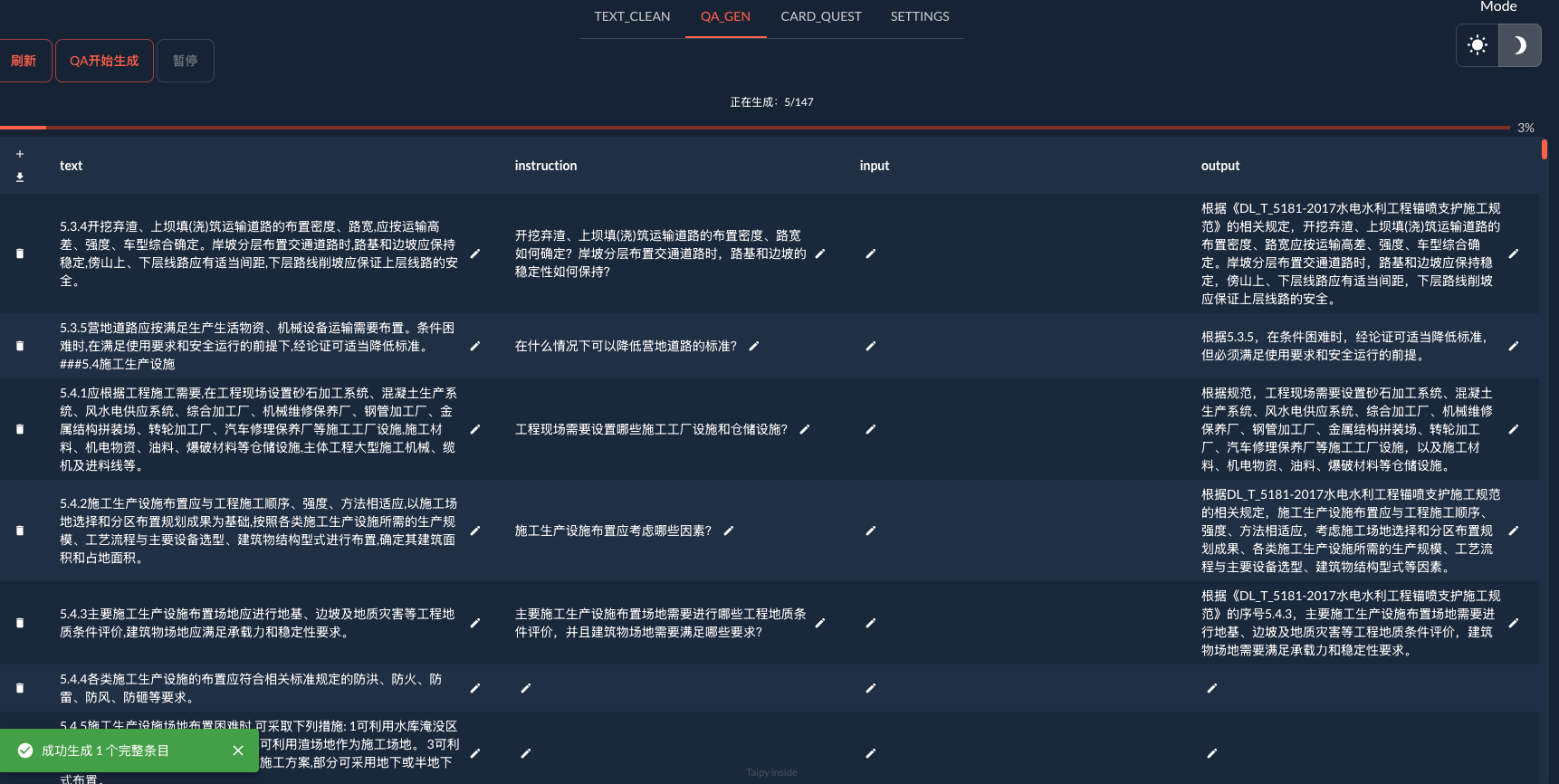
Produces Q&A pairs that have multiple uses in my industry:
the current use is still in the form of cue words to give the model instructions to complete the task, if you can collect the dataset in the process, that is:
Q: Material content
A: QA of the material content
Such QA would be collected and utilized to train and fine-tune a model dedicated to producing QA. This saves a lot of arithmetic and token consumption.
I've also thought about the issue of deciding what to give to the big model as material content as a single input: if you directly give each paragraph of the standard specification to the big model, you'll lose the contextual relationships in the specification and lose the logic of the whole chapter. For example, 3.2.1 and 3.2.2 are complementary to each other, and the meaning of the text can only be perfectly expressed when the two norms are used as material at the same time. Violent cuts alone will lose the textual information. So introducing a big model for semantic understanding is also a solution, and it also allows users to perform manual labeling to determine which ones to use as material for one input.